Twala records Philippines’ first two eNotarized documents, eyes eGov integration
Legal aid and legal technology partnerships put public service at the center of digital reform
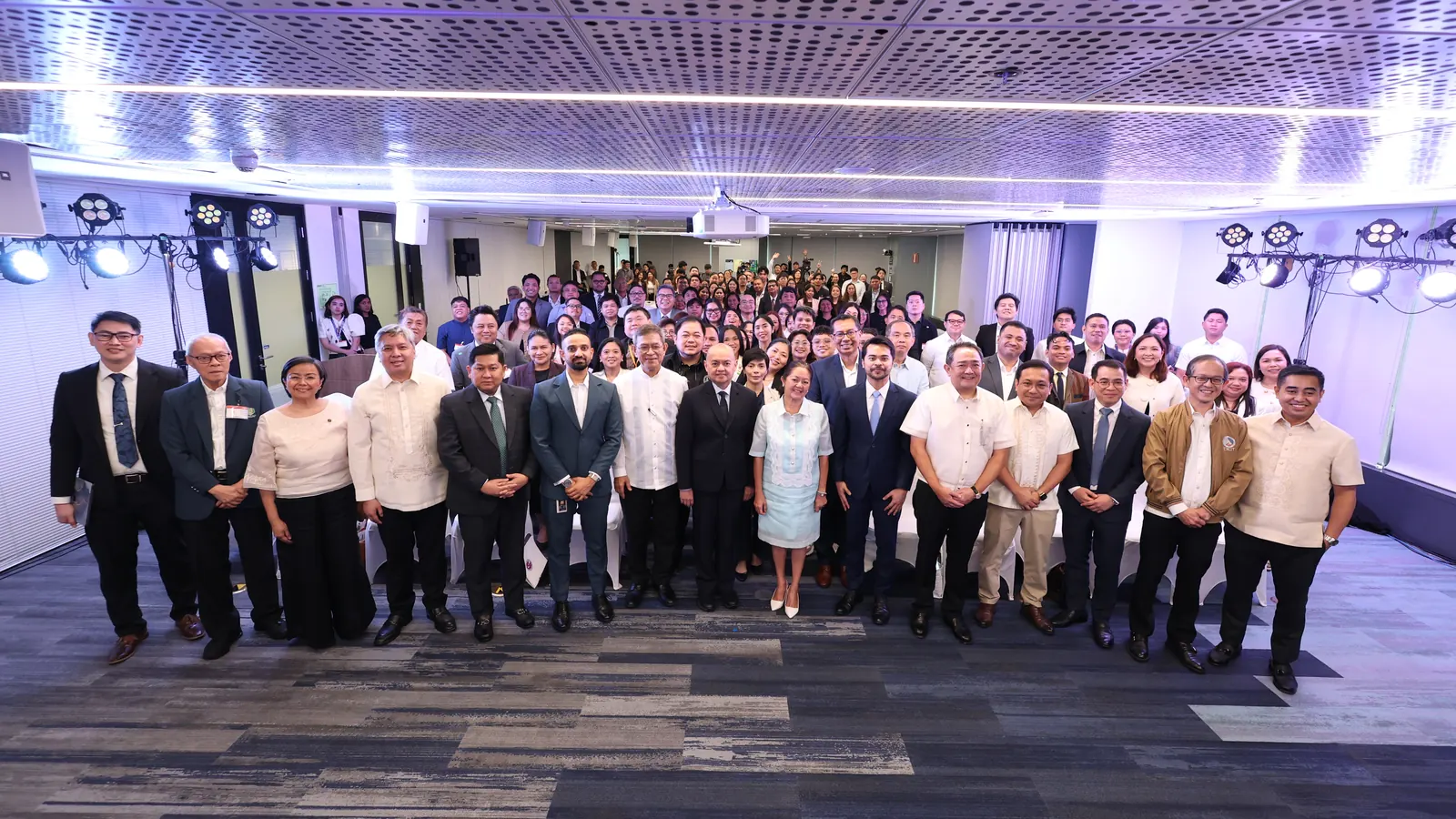
TAGUIG CITY, October 19, 2026 — Twala marked the official launch of electronic notarization in the Philippines today with the electronic signing and notarization of agreements with the Integrated Bar of the Philippines (IBP) and the University of the Philippines (UP) College of Law, witnessed by First Lady Louise Araneta-Marcos, a lawyer, and Supreme Court Senior Associate Justice Marvic M.V.F. Leonen. These documents support wider access to legal aid and the responsible use of legal technology.
The agreements were the first documents electronically notarized in the Philippines, through Twala’s platform. Twala is a DOST-backed Philippine legal technology company whose Electronic Notarization Facility is accredited by the Supreme Court.
The launch comes 26 years after the Electronic Commerce Act established legal recognition of electronic documents and signatures. It also builds on the Supreme Court’s 2025 Rules on Electronic Notarization, which now provide the framework for commissioned electronic notaries public to notarize electronic documents through accredited facilities, either in person or remotely.
The ceremonial electronic notarization, likewise witnessed by the recently appointed Department of Information and Communications Technology (DICT) Secretary Robert Joseph de Claro, Anti-Red Tape Authority (ARTA) Director General, Secretary Ernesto V. Perez, and other representatives from government, the legal profession, business, banking and real estate sectors, underscored how much trusted digital transactions matter to the people the justice system serves. Senator Francis “Kiko” Pangilinan, Chairperson of the Senate Committee on Justice, delivered a recorded message.
“Secure eNotarization removes geographical and physical barriers bringing legal protection to small players, safely and instantly,” said Leonen, the event’s Guest of Honor.
Those safeguards are built into the platform itself. Twala's Electronic Notarization Facility is built on AWS, which provides the security and reliability that legally binding electronic transactions require. During the notarial act, AI-powered identity verification helps confirm that the person before the notary is the person named in the document and is present at signing, supporting the safeguards under the Supreme Court's 2025 Rules on Electronic Notarization and building confidence in electronically notarized documents.
Watch the livestream recording: Twala Legal Tech Forum 2026: eNotary and Digital Trust
Technology in the service of legal aid
The IBP agreement supports the delivery of legal aid under the Supreme Court’s Unified Legal Aid Service (ULAS) framework. Through the initiative, participating lawyers will be able to provide free online consultations to eligible beneficiaries using Twala’s platform, subject to the program’s intake and scheduling arrangements. Twala will also provide free electronic notarization credits for eligible indigent clients, easing the travel, expense and other practical barriers that keep people from seeking legal advice or completing necessary documents.
“No Filipino should have to endure such difficulties to exercise their rights or seek legal assistance.,” said Senator Pangilinan, who is the Chairperson of the Senate Committees on Justice and Human Rights and Agriculture.
Preparing the legal profession for digital practice; eGov app integration in the works
The agreement with the UP College of Law, meanwhile, establishes a strategic collaboration to advance legal technology, particularly in the areas of artificial intelligence (AI) and digitalization. The partnership encompasses capacity building in legal technology, access to innovative legal technology solutions, development of policies and frameworks governing the use of AI in legal practice, promotion of ease of doing business, and advancement of legal research and innovation.
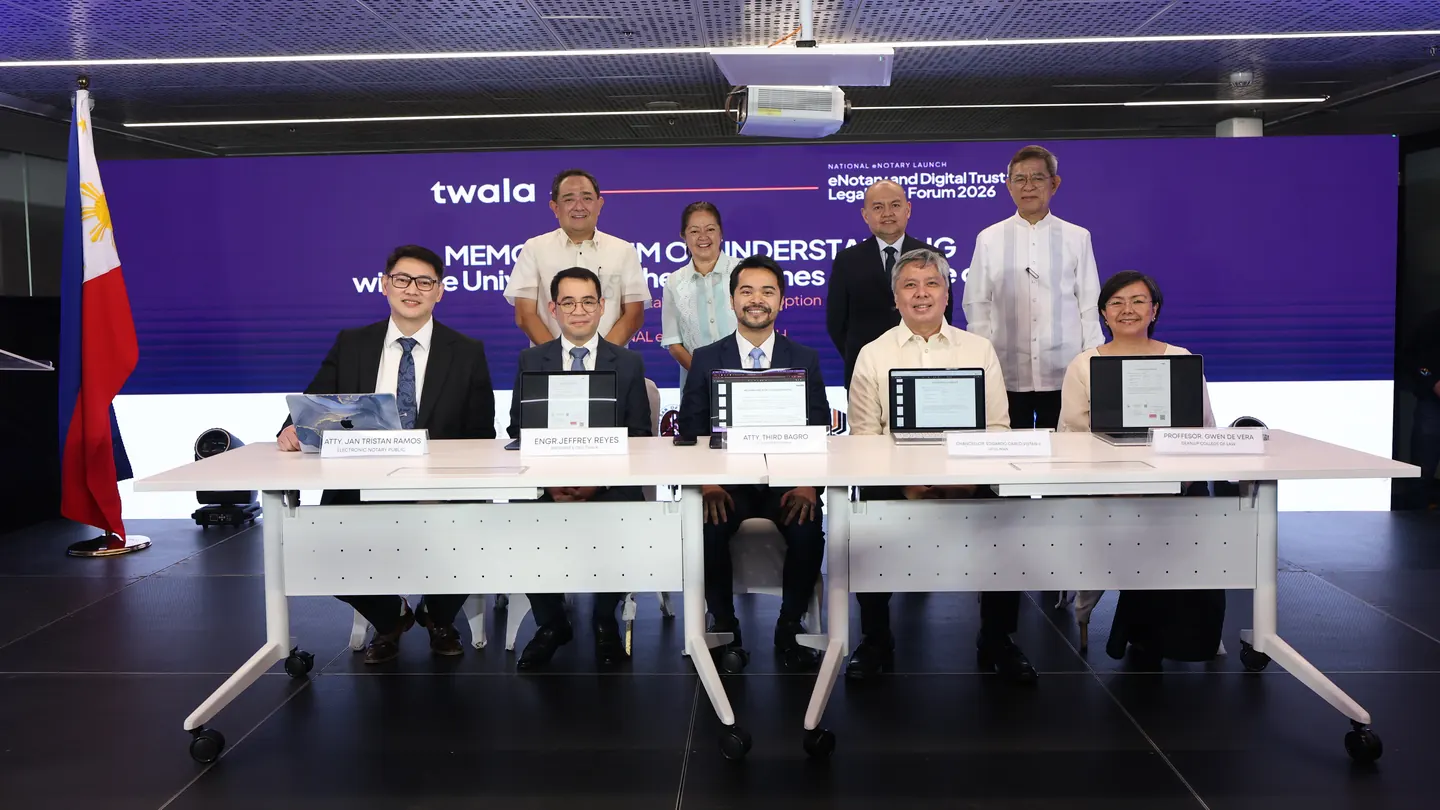
“The value of electronic notarization will be measured in the time people save and the legal help they can reach. We wanted the first documents notarized on Twala to reflect that purpose—agreements supporting legal aid and preparing the profession for digital practice,” said Engr. Jeffrey Reyes, Co-Founder and Chief Executive Officer of Twala. ”I am also excited to announce that Twala will soon integrate with the eGov app, making eNotarization easier to access through a platform already being used by millions of Filipinos,” Reyes added.
Turning reform into everyday use
A legal technology forum following the signing examined how electronic notarization can improve access to justice, ease of doing business, banking and real estate transactions. The panel included Dean Gwen Grecia-De Vera of the UP College of Law, Atty. Allan G. Panolong, National President of the IBP, Atty. Jaime Juanito P. Portugal, Atty. Barry Purisima, Corporate Secretary of the Rural Bankers Association of the Philippines (RBAP) and Deputy Administrator of the Land Registration Authority (LRA).
Government adoption and Filipino innovation
Government speakers highlighted that the next step is putting the new framework to work in public services. “Together, with all government branches, we fight against red tape. True change is felt when we unite. Let's build a modern digital first economy where trust is encrypted, processes are seamless, and every Filipino feels that the government is their partner in success.”said ARTA Director General Perez.
“The success of electronic notarization is not measured by how many transactions we move online but how many lives we make easier. How much closer it brought services to the people.,” said DICT Secretary de Claro.
“Change happens fast when leaders go all in,” said Atty. Herminio “Third” Bagro, Twala’s Co-Founder and General Counsel. “With the legal framework and accredited technology now available, there is no more excuse for keeping transactions on paper when they can be completed digitally. Agencies and businesses must update their procedures so that electronic notarization translates into fewer queues, fewer trips, and lower costs for citizens and businesses,” he added.
The event was held in partnership with the Supreme Court of the Philippines, the Senate of the Philippines, the Department of Science and Technology, the Anti-Red Tape Authority, the Land Registration Authority, the Integrated Bar of the Philippines, the University of the Philippines College of Law, the Rural Bankers Association of the Philippines, and the Association of Law Students of the Philippines, and was supported by Amazon Web Services (AWS).
About Twala
Twala is a Philippine legal technology company providing secure digital signatures, electronic notarization, identity verification, and AI-powered document solutions. Built on blockchain and public key infrastructure (PKI), its platform enables individuals, businesses, and government institutions to execute and manage legally binding digital transactions securely and efficiently. Twala is an accredited Electronic Notarization Facility (ENF) under the Supreme Court of the Philippines' 2025 Rules on Electronic Notarization. A DOST-backed startup, Twala is supported by DOST-PCIEERD through its Startup Grant Fund Program and maintains R&D partnerships with DOST-ASTI. Twala is part of the AWS Startup Program. Twala has been recognized as Tech Innovator of the Year at the 2025 KMC Startup Awards, named to the Esquire Philippines 2024 Trailblazers List, and honored by ARTA as an Ease of Doing Business Champion in 2024. Twala is also a member of the Cloud Signature Consortium, a global digital standards organization.